
Escape Gas Prices and Noise: Why Ohio Drivers Are Switching to Chevy EVs Now

July 23rd, 2026 by

The morning drive along Route 13 or the steady cruise down Interstate 71 is undergoing a quiet, powerful transformation. For decades, drivers in Mansfield, Mount Vernon, and Mount Gilead have relied on traditional internal combustion engines to navigate their daily routines. Today, however, the shift toward electric vehicles (EVs) offers a compelling alternative that redefines what it means to travel through north-central Ohio. When you choose an EV, you are not merely selecting a different powertrain; you are upgrading to a driving experience defined by whisper-quiet cabins, instantaneous acceleration, and a remarkably low cost of ownership. The local roads we travel every day—whether commuting to work, dropping children off at school, or running weekend errands—are perfectly suited for the efficiency and refined dynamics of modern electric vehicles.

At Fredericktown Chevrolet, we understand that transitioning from a gasoline-powered vehicle to an electric one can feel like a major leap. That is why we are committed to serving as your trusted local authority on all things electric. From understanding battery capacities to navigating local charging networks, our team is here to provide clear, honest, and practical guidance. Making the switch means saying goodbye to the vibrations, noise, and volatile fuel prices of gas vehicles, and embracing a smoother, more predictable way to drive. Whether you are navigating the winter snows of Richland County or enjoying a bright summer day in Knox County, a Chevrolet EV offers the modern engineering, safety systems, and reliable performance you need to travel with absolute confidence. To experience this revolution firsthand, we invite you to Get Directions to Fredericktown Chevrolet and speak with our dedicated team today.
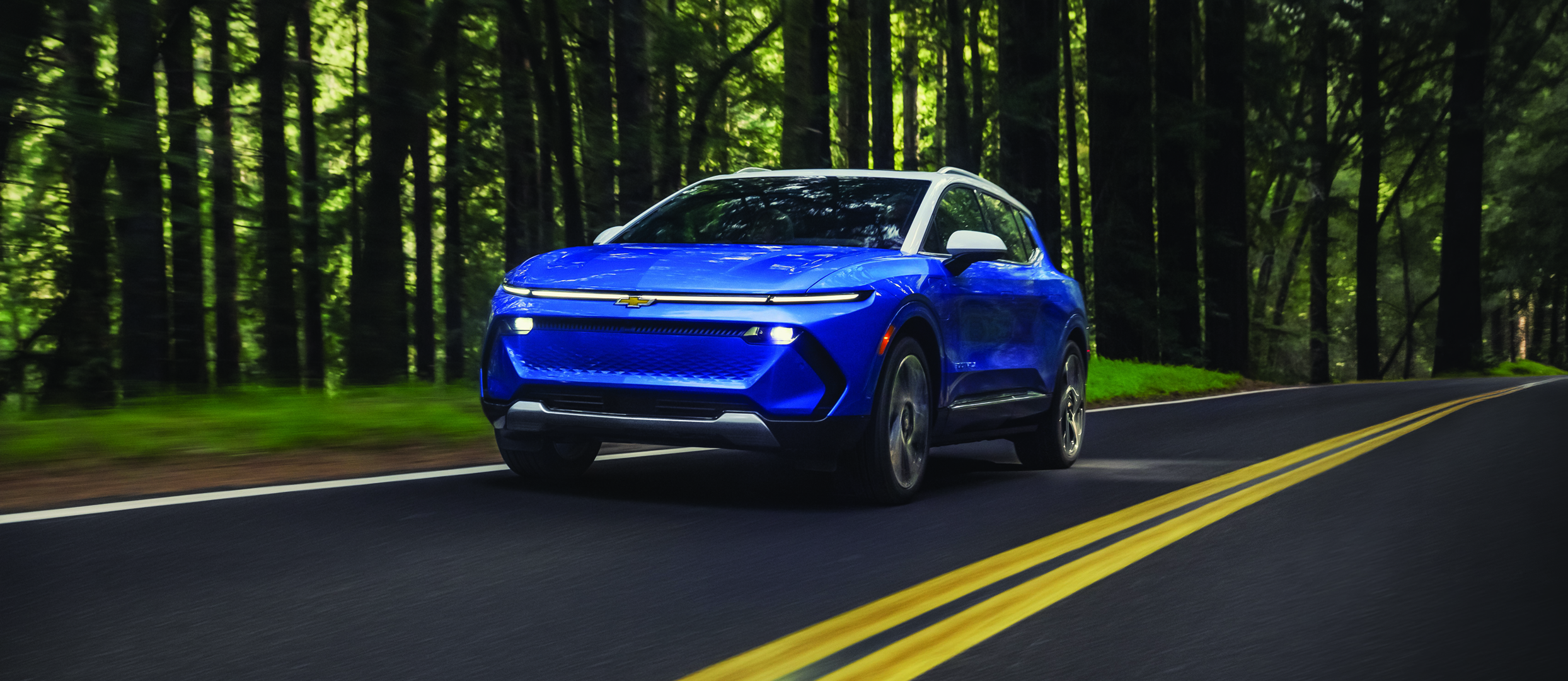
What Are the Main Environmental Benefits of Switching to an Electric Vehicle?

One of the most immediate and profound reasons to choose an electric vehicle is the direct positive impact it has on our local environment. Unlike traditional gasoline or diesel vehicles, which continuously release carbon dioxide, nitrogen oxides, and fine particulate matter from their tailpipes, an EV operates with zero tailpipe emissions. This means that every mile you drive in an electric vehicle helps keep the air cleaner in our local neighborhoods, school zones, and public parks. When we reduce these localized emissions, we directly contribute to a healthier environment for families living throughout Knox and Richland counties, ensuring that our communities remain vibrant and clean for generations to come.

Furthermore, preserving the natural beauty of north-central Ohio is a responsibility we all share. From the scenic waters of the Kokosing River to the serene walking trails of our local county parks, our region’s ecology is precious. Traditional internal combustion engines pose constant risks of oil, coolant, and transmission fluid leaks that can wash into storm drains and contaminate local waterways. Electric vehicles utilize significantly fewer fluids, virtually eliminating the risk of these toxic drippings. Even when factoring in the emissions from the regional electricity grid, study after study shows that EVs have a significantly lower lifetime carbon footprint than gas-powered alternatives, and as Ohio’s energy grid incorporates more renewable sources, your EV will automatically become even cleaner over time.

How Much Cheaper Per Mile Is Electricity Compared to Gasoline for an EV?

When you sit down to calculate the true cost of driving, the financial math overwhelmingly favors the electric vehicle. Gasoline prices are notoriously volatile, rising and falling based on global oil markets, refinery issues, and seasonal demand. This makes budgeting for daily travel difficult. In contrast, residential electricity rates in Ohio are historically stable and significantly cheaper when compared on a per-mile basis. While a typical gas-powered vehicle might cost between 12 and 16 cents per mile to fuel—depending on current gas prices and vehicle efficiency—an electric vehicle charged at home in the Fredericktown area generally costs just 3 to 5 cents per mile to run. This dramatic difference translates directly into substantial monthly savings.

Let’s look at the actual numbers for a commuter traveling between Mount Gilead, Mansfield, and Mount Vernon. If you drive roughly 15,000 miles a year, a traditional vehicle averaging 25 miles per gallon will consume 600 gallons of fuel. At an average price of $3.50 per gallon, that is $2,100 spent annually at the pump. Conversely, driving an efficient electric vehicle over that same distance will require approximately 4,300 kilowatt-hours (kWh) of electricity. Based on typical local utility rates of about 15 cents per kWh, your annual electricity cost to power the vehicle would be roughly $645. That represents an annual savings of nearly $1,450 on fuel alone. Over a five-year ownership period, that is more than $7,000 kept in your wallet. If you are looking to maximize your financial efficiency, you might also consider browsing our high-quality Used vehicles inventory for pre-owned EV options that deliver excellent value from day one.

Cost Factor

Gasoline Vehicle

Electric Vehicle (EV)

Average Fuel Cost

$3.50 per gallon

$0.15 per kWh

Efficiency Average

25 Miles per Gallon

3.5 Miles per kWh

Cost Per Mile

$0.14 per mile

$0.04 per mile

Annual Cost (15,000 mi)

$2,100

$600

5-Year Fuel Cost

$10,500

$3,000

What Is the Average Range of a New Electric Vehicle in 2026?

Daily Commuting

For the vast majority of drivers in north-central Ohio, daily travel fits well within the limits of modern battery technology. Whether you are driving from Fredericktown to Mount Vernon for work, heading to Mansfield for shopping, or commuting to Mount Gilead, the typical daily drive rarely exceeds 40 to 60 miles. With the average range of new 2026 electric vehicles comfortably sitting between 250 and 300+ miles on a single charge, you can easily complete a full week of local commuting without ever needing to worry about finding an intermediate charging station.

Regional Road Trips

Planning a weekend trip to Columbus for a sporting event or heading north to Cleveland to visit family? Modern EVs eliminate the old concept of ‘range anxiety’ entirely. A standard round trip from our dealership to downtown Columbus is roughly 110 miles, representing less than half of the usable capacity of a fully charged 2026 Chevrolet EV. You can make the trip, enjoy your day, drive back home, and still have ample reserve range left in the battery pack, all without stopping to plug in along the highway.

Rural Adaptability

Rural driving often involves longer stretches of open highway and fewer immediate amenities, which is why battery capacity is so critical. Fortunately, today’s advanced lithium-ion and upcoming solid-state chemistry designs ensure high efficiency even when cruising at highway speeds. Advanced thermal management systems actively protect the battery, maintaining consistent range performance during hot Ohio summer days and chilly winter mornings alike, making EVs highly practical for our local rural routes.

What Does a Typical Weekly Charging Routine Look Like for an EV Owner?
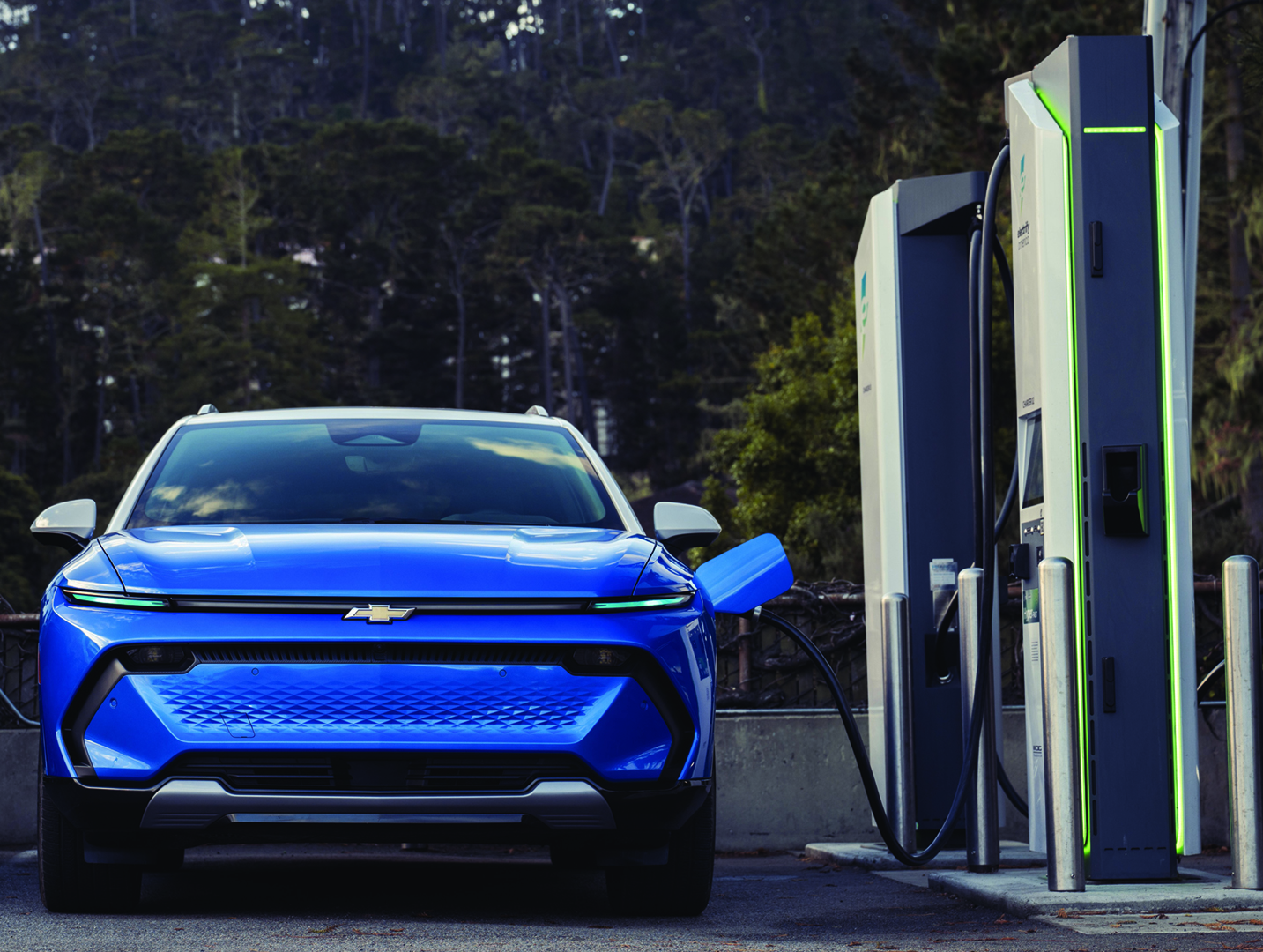
One of the most convenient aspects of owning an electric vehicle is that you no longer have to plan your day around finding a gas station. Instead, your vehicle charges while you sleep, work, or run errands. For most EV owners, the weekly charging routine is incredibly simple and quickly becomes second nature. It begins with Level 1 or Level 2 charging at home. Level 1 charging utilizes a standard 120-volt household outlet, which is excellent for adding 3 to 5 miles of range per hour—perfect for drivers with shorter daily commutes. However, most owners choose to install a Level 2 home charger, which operates on a 240-volt outlet (similar to a clothes dryer) and can fully replenish a depleted battery overnight, adding roughly 25 to 30 miles of range per hour.

A typical week might look like this: On Sunday evening, you plug your vehicle into your Level 2 home charger, setting it to charge during off-peak hours when utility rates may be lower. By Monday morning, you wake up to a ‘full tank’ of 300 miles. You drive to work, run errands around Mansfield, and return home with 240 miles of range left. You don’t even need to plug in every night; many drivers only plug in two or three times a week. If you plan a longer trip, you can utilize public DC Fast Chargers, which can boost your battery from 20% to 80% in as little as 30 minutes. These fast chargers are conveniently located along major highway corridors and shopping centers, allowing you to quickly top off while grabbing a cup of coffee or a quick lunch.

Can You Drive or Charge an Electric Vehicle in Heavy Rain or a Car Wash?

It is completely natural to wonder about the safety of high-voltage electrical systems in wet weather. A common myth suggests that electric vehicles are more susceptible to water damage or present electrical safety hazards during heavy downpours, severe thunderstorms, or automated car washes. We want to clear this up definitively: electric vehicles are engineered to meet incredibly rigorous waterproofing standards, making them completely safe to operate, charge, and wash in all types of wet weather conditions.

Every electric vehicle’s battery pack, electric motor, and high-voltage wiring system are hermetically sealed against moisture, dust, and debris. They undergo intensive testing, including high-pressure water spray tests and deep flooding simulations, to earn top-tier IP (Ingress Protection) safety ratings. This extensive sealing prevents water from ever making contact with the active electrical components. Whether you are driving through a typical Ohio summer downpour, navigating wet, slushy winter roads, or taking your vehicle through a high-pressure commercial car wash, the protective shielding remains completely secure and impervious to water entry.

When it comes to charging, the safety protocols are equally robust. EV charging plugs and vehicle receptacles are specifically designed to prevent electricity from flowing until a secure, physical connection and an electronic communication handshake are established between the vehicle and the charger. This means the metal pins inside the plug are completely unpowered as you handle them, even in a heavy rainstorm. Once the physical seal is locked, the system runs an automatic safety check to confirm there is no moisture bridging the contacts before initiating the flow of electricity. If any fault is detected, the system instantly cuts power, keeping you and your vehicle entirely safe.

What EV Specs and Features Should I Prioritize When Shopping?
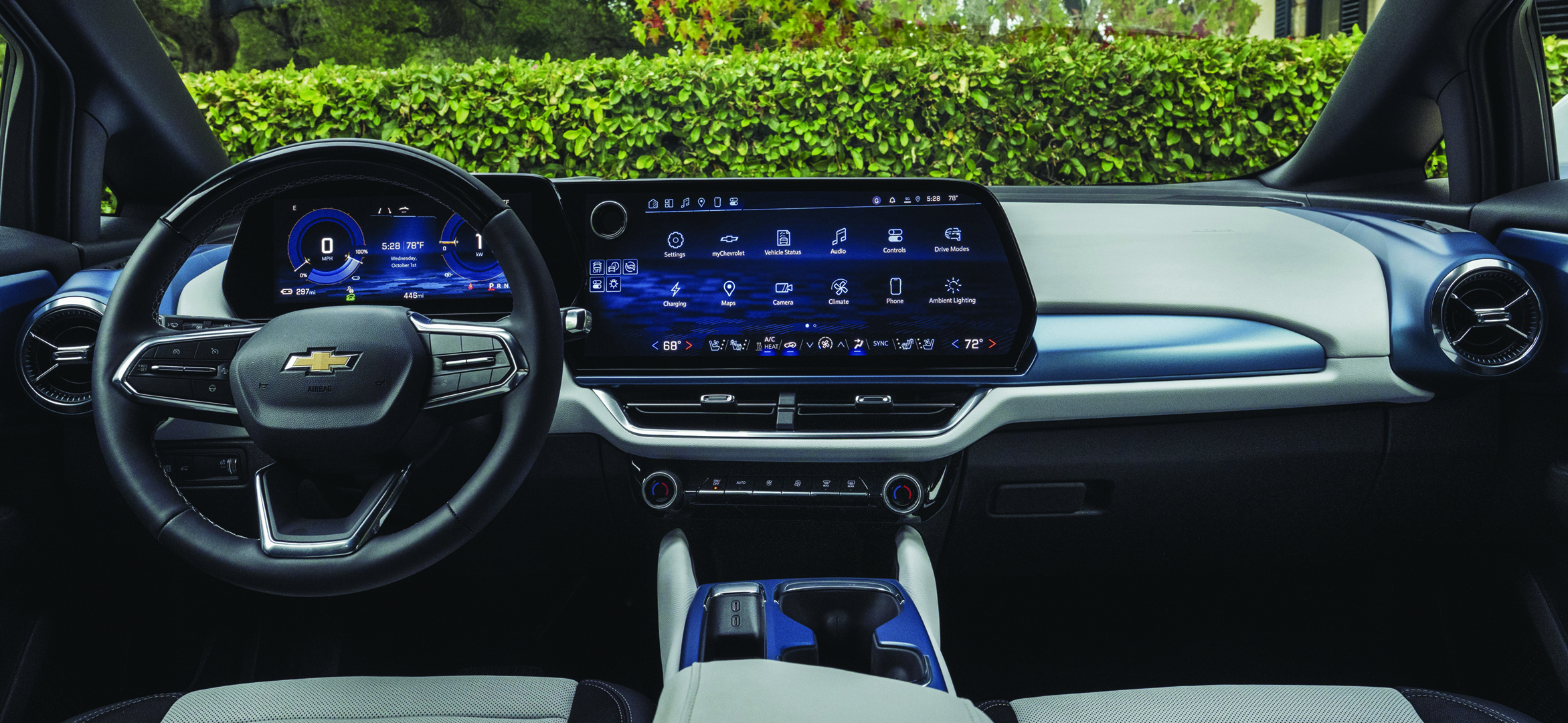
Battery & Charging

When comparing EV models, pay close attention to battery capacity, measured in kilowatt-hours (kWh), and DC Fast Charging speeds, measured in kilowatts (kW). A larger battery (typically 75 to 100 kWh) provides more total range, while higher fast-charging compatibility (such as 150 kW or higher) ensures you can add substantial range in minutes rather than hours when charging on the go during longer road trips.

Regenerative Braking

Regenerative braking is a standout EV feature that captures kinetic energy during deceleration and feeds it back into the battery. Look for vehicles with adjustable regenerative settings, including ‘One-Pedal Driving.’ This advanced system allows you to accelerate, slow down, and come to a complete stop using only the accelerator pedal, making stop-and-go traffic much smoother while maximizing your overall driving range.

Cold-Weather Prep

Given our chilly winters in north-central Ohio, prioritizing cold-weather features is highly recommended. Look for an EV equipped with an efficient cabin heat pump, which preserves battery range in cold weather far better than standard resistive heaters. Heated seats, a heated steering wheel, and cabin pre-conditioning capabilities (allowing you to warm up your vehicle while it is still plugged in) are also essential winter comforts.

How Do EV Maintenance Costs Compare to Traditional Gas Vehicles?

One of the most satisfying aspects of owning an electric vehicle is realizing how rarely you need to visit a service center. Traditional gasoline engines are complex machines containing thousands of moving parts, many of which operate under extreme heat and pressure. This complexity requires regular maintenance to prevent failures. With an EV, the mechanical design is incredibly simple. An electric motor has only a fraction of the moving parts found in an internal combustion engine, resulting in a dramatic reduction in wear and tear over the life of the vehicle.

Think of all the routine automotive services you can permanently cross off your to-do list: oil changes, oil filter replacements, spark plugs, ignition coils, timing belts, serpentine belts, oxygen sensors, catalytic converters, and muffler replacements. Because EVs do not have complex multi-gear transmissions, you also avoid transmission fluid flushes and clutch replacements. Even your vehicle’s brakes last significantly longer. Thanks to regenerative braking, the electric motor handles most of the deceleration, meaning your brake pads and rotors experience far less physical friction and can easily last twice as long as those on a traditional car.

Of course, electric vehicles are not completely maintenance-free. They still require routine care to ensure safe and efficient operation. This includes regular tire rotations, cabin air filter replacements, windshield wiper blade replacements, and periodic checks of the braking system and suspension components. At Fredericktown Chevrolet, our factory-certified service technicians are fully trained in advanced EV diagnostics and safety protocols. Whether you need a quick tire rotation or a multi-point inspection to prepare for an Ohio winter, you can easily use our online Service appointment scheduler to book a time that works for you. If you ever need replacement wiper blades, cabin filters, or specialized accessories, our Parts Department Main page is fully stocked to keep your Chevrolet EV performing at its absolute best.

Are There Federal Tax Credits and Local Ohio Incentives for Buying an EV?

To make the transition to electric driving even more financially attractive, there are significant federal, state, and local financial incentives available to eligible buyers. The most notable of these is the Federal Clean Vehicle Credit, which offers up to $7,500 in tax credits for the purchase of a qualifying new electric vehicle. In 2026, this credit can often be transferred directly to our dealership at the point of sale. This means you do not have to wait until you file your taxes the following spring to receive the benefit; instead, the $7,500 can be applied as an immediate, direct discount on the purchase price of your new Chevrolet EV, lowering your monthly financing payments right from the start.

In addition to federal incentives, local utility providers in north-central Ohio often offer rebates and special rate programs to help offset the cost of installing a Level 2 home charging station. Companies like AEP Ohio and various local electric cooperatives frequently provide financial incentives that can cover a significant portion of the charger purchase and electrical installation costs. Furthermore, many utility companies offer time-of-use rate plans, allowing you to charge your vehicle overnight at deeply discounted rates when energy demand is low. Our knowledgeable finance team at Fredericktown Chevrolet stays fully updated on all current federal guidelines and local utility programs, ensuring we can help you maximize every available incentive and secure the best possible value on your electric vehicle journey.

Why the Instant Torque and Quiet Ride of an EV Will Change How You Drive

While the environmental and financial benefits of electric vehicles are undeniable, the actual driving experience is what truly wins people over. Traditional internal combustion engines must rev up to a certain RPM range before they can deliver their maximum power and torque. This physical limitation creates a noticeable delay between the moment you press the gas pedal and the moment the vehicle actually accelerates. Electric motors, however, operate on entirely different physical principles, delivering 100% of their available torque instantly from a complete stop. This results in incredibly responsive, linear, and predictable acceleration that makes merging onto busy highways or pulling out into traffic feel effortless and safe.

In addition to this responsive performance, electric vehicles offer a level of cabin quietness and serenity that traditional luxury vehicles struggle to match. Without the constant vibration, exhaust noise, and mechanical clatter of a combustion engine, the cabin of a Chevrolet EV becomes a peaceful sanctuary. This dramatic reduction in noise and vibration significantly lowers driver fatigue, especially during long commutes or stressful traffic situations, allowing you to enjoy your favorite music, listen to a podcast, or hold a clear conversation with your passengers in a truly relaxed environment.

The handling characteristics of an electric vehicle are also uniquely satisfying. Because EV battery packs are heavy and are engineered to sit flat along the floor of the vehicle—often referred to as a skateboard chassis architecture—the vehicle’s center of gravity is significantly lower than that of a traditional car or SUV. This low center of gravity dramatically reduces body roll when cornering and provides an incredibly stable, planted feel on winding rural roads throughout north-central Ohio. The combination of instant responsiveness, a whisper-quiet cabin, and exceptionally stable handling creates a premium, confident driving dynamic that is virtually impossible to replicate in a traditional gasoline-powered vehicle.

How to Transition from Your Current Gas Vehicle to a New Chevrolet EV

Transitioning from a gasoline vehicle to an electric one is a straightforward process when you have the right team supporting you. At Fredericktown Chevrolet, we have refined the upgrade process to make it as simple, transparent, and seamless as possible. The journey begins by evaluating your current vehicle. Trading in your gas-powered car, truck, or SUV is a highly effective way to lower the overall cost of your new electric vehicle. To get started from the comfort of your own home, you can easily use our online Sell/Trade-in Instant offer tool to receive a highly accurate, competitive valuation for your current vehicle in just a few clicks.

Once you have an idea of your trade-in value, the next step is to explore your financing options. Our dedicated finance specialists work closely with a wide network of trusted lenders to secure competitive rates and flexible terms that align perfectly with your budget. To save time at the dealership, you can easily Get pre-approved for Financing online using our secure credit application. This allows us to have your personalized financing options prepared and waiting for you before you even step onto our showroom floor, making your entire purchasing experience fast, efficient, and completely stress-free.

Finally, when you take delivery of your new Chevrolet EV, our team will guide you through a comprehensive vehicle orientation. We will walk you through all the advanced technology features, show you how to customize your regenerative braking preferences, and help you set up your home charging schedule. We will also assist you in downloading and configuring the MyChevrolet mobile app, which allows you to locate public charging stations, monitor your battery charge level, and pre-condition your vehicle’s cabin temperature remotely. Our goal is to ensure you drive off our lot feeling fully informed, completely comfortable, and excited for the road ahead.

Finding EV Chargers Around Mansfield, Mount Vernon, and Mount Gilead

Mansfield Charging

As the largest municipal area in our immediate region, Mansfield features a rapidly growing public charging infrastructure. Drivers will find multiple Level 2 and fast DC charging stations conveniently located near major shopping corridors along Hanley Road, local medical centers, and public parking garages downtown, allowing you to easily charge while dining, shopping, or working.

Mount Vernon Infrastructure

In Mount Vernon, public charging is highly accessible, with several municipal charging stations situated in the heart of downtown. These stations are perfect for topping off your battery while enjoying a walk around Public Square, visiting local boutiques, or dining at downtown restaurants. Additional charging stations are located near educational campuses and local parks.

Mount Gilead & I-71 Corridor

For those traveling near Mount Gilead or commuting along Interstate 71, strategically placed high-speed DC fast chargers are situated near major highway exits, including the popular Bellville and Route 95 interchanges. These fast-charging locations are ideal for quick, high-power charging sessions during longer regional trips across the state.

Ready to Experience the Electric Revolution? Visit Fredericktown Chevrolet Today

There has never been a more exciting or practical time to make the switch to an electric vehicle. With incredible range capabilities, minimal maintenance requirements, substantial fuel savings, and a driving dynamic that is both thrilling and serene, choosing an EV is a decision that rewards you every single mile. At Fredericktown Chevrolet, we are incredibly proud to serve as your premier local destination for the latest in Chevrolet electric vehicle technology. Our passionate sales consultants, experienced finance professionals, and certified service technicians are all here to support you at every stage of your EV journey, ensuring you have a highly rewarding, world-class experience.

We invite you to take the first step today. Explore our complete selection of All New Vehicles online to discover the latest Chevrolet electric models, or browse our pre-owned selection to find the perfect fit for your lifestyle. If you have any questions about charging, home installation, battery warranties, or current incentives, please do not hesitate to Call us at (740) 694-6015 to speak directly with one of our friendly EV specialists. Better yet, visit our showroom at 109 Bollinger Dr in Fredericktown to take a test drive, feel the instant torque, and experience the quiet comfort of a Chevrolet EV for yourself. Your electric future is waiting, and we cannot wait to help you drive it home.
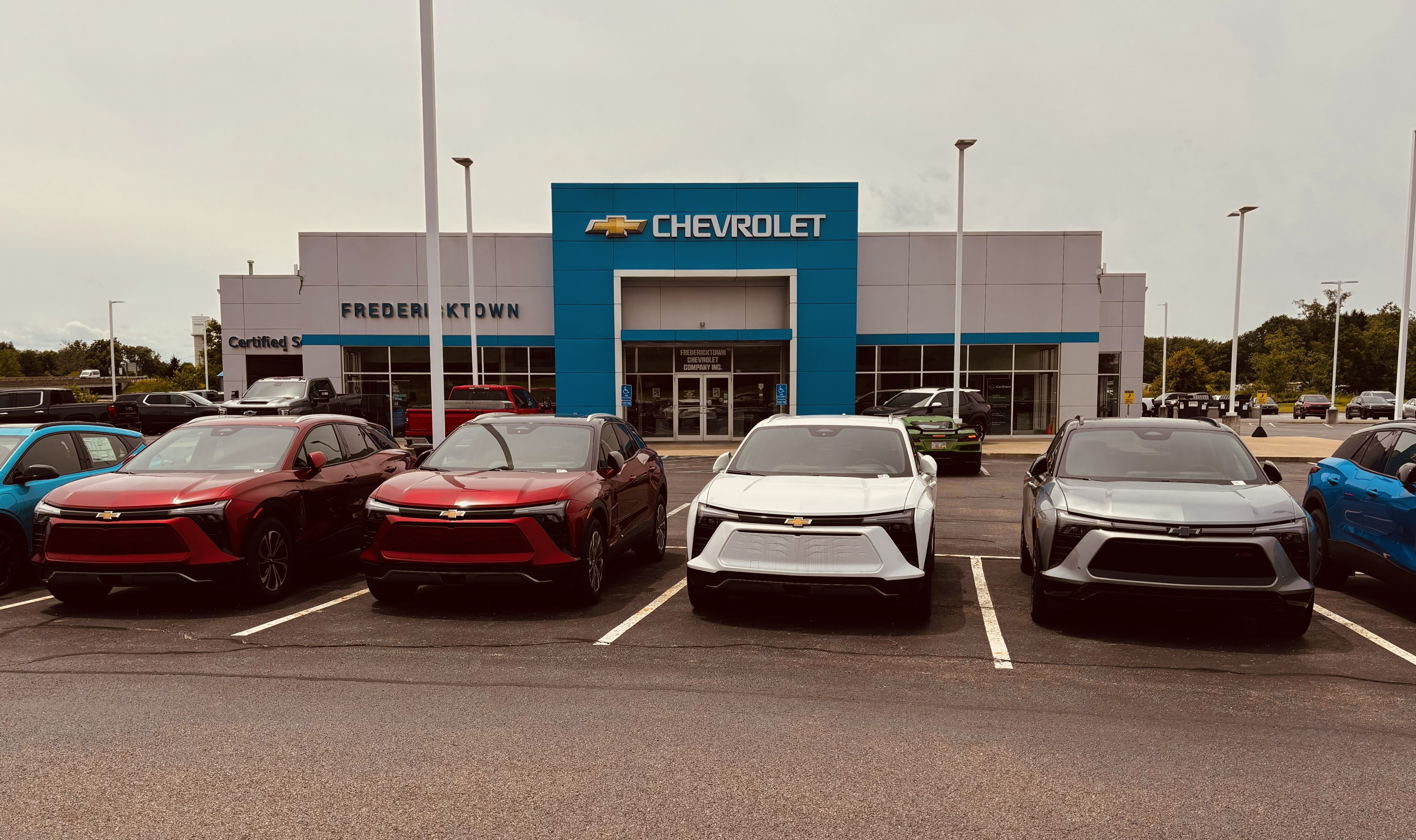
Line of Chevrolet Blazer EV SUVs parked in front of Fredericktown Chevrolet dealership.